Back in the analog pre-Internets days it’s hard to overstate how important mixtapes were.
Whether they were for your friends in order to introduce them to new music or for long drives on lazy summer days, or (infinitely more importantly) whether they were to try to impress that One Special Girl to whom you had So Much To Tell but was afraid to speak to, mixtapes were a labor of love 45 minutes to a side.
They took a while to make because you were dubbing in real-time (hi-speed dubbing cut down on the cassette tape audio quality which seemed so important at the time) which gave you time to think about both the songs and the person for whom you were making it (did I mention that One Special Girl?) and of course there was the cramped writing that you had to do on the cassette insert in block cap letters. It was desperately important that the lettering be in block cap letters for reasons that now escape me.
When CDs supplanted mixtapes the idea was still the same, although the process was much faster because you were just burning a playlist to disk. They seemed more disposable and less a labor of love but they were still fun.
Before streaming services the idea had sort of gone out of style unless you wanted to e-mail a bunch of files to accompany a playlist or were a rapper “poppin’ the trunk” but now that streaming services are common I think it’s time to resurrect the mixtape for the streaming age.
Several “One Special Girls” have come and gone, but the fun of making mixtapes remains. They may be just Spotify playlists now, but to me they’ll always be mixtapes. Here’s one for March 2015 with mostly recent stuff. Throw it in a playlist in Spotify and see what you think. Enjoy!
===================
1. Public Service Broadcasting – Gagarin
2. Simple Minds – Let The Day Begin
3. Toad The Wet Sprocket – New Constellation
4. James Bay – Hold Back The River
5. Death Cab For Cutie – Black Sun
6. Houndmouth – Sedona
7. Modest Mouse – Lampshades On Fire
8. Florence & The Machine – What Kind Of Man
9. Andrew McMahon In The Wilderness – Cecilia And The Satellite
Public Service Broadcasting‘s previous releases have been based on, strangely enough, old public service broadcasts; mainly British wartime broadcasts.
The Race For Space puts a soundtrack to the 1960s & 70s space race heyday using broadcasts from the time. All the major firsts are covered – first launch, first man in space, first woman in space, space walk, lunar orbit and lunar landing. The soundtrack is largely electronic with virtually no vocals other than the broadcasts themselves.
The tracks are in chronological order starting off with The Race For Space, which takes JFK’s “We choose to go to the moon” speech and puts it to a heavenly chorus that sounds like the voice of space itself. Sputnik is next, with a hypnotic electronic beat and synths which build and build to a crescendo, adding in layers of sound and crashing drums along the way.
The first single from the album, Gargarin, sounds slightly out of place, with its funky guitar and brass. As a standalone track it worked well, but it disturbs the mood of the album somewhat, in particular because the following track Fire In The Cockpit is a very sombre affair which covers the Apollo 1 fire which killed three astronauts.
Right in the middle of the album are two tracks which perfectly capture the mood of the events they recount – E.V.A. which covers the first man to walk in space, and The Other Side, about the first manned lunar orbit. You can feel the tension and then the joy as each mission is successful.
Valentina is clearly about the first woman in space, but is the only track that doesn’t use any broadcasts from the event. Instead it is a largely instrumental guitar track, with the only vocal being an evolving chorus of the name ‘Valentina’.
The album ends on two tracks which cover the lunar landings. Go! cleverly focus on thelanding, rather than the first moon walk, and Tomorrow completes the race for space with the final departure from the moon by the Apollo 17 mission.
So, an early contender for album of 2015, and even if electronic music is not your thing, it’s at least a good history lesson.
Forty years on, Los Lobos have not only survived, they still howl.
There is something noble about seeing a professional working band in the October of their careers, especially a band as great as Los Lobos. Their brilliant 1984 major label debut asked the question “How Will The Wolf Survive” and the answer 31 years later is “quite nicely, thank you”.
Los Lobos have constructed a career out of constant touring and remain consummate musicians, able to turn on a dime from roots-Americana to roadhouse blues to jazz to Norteno to jamband riff-rock. To me Los Lobos are the consummate American band, and possibly one of the most underrated American bands of all time. I’ve never seen a band proficient in so many different styles and moods.
I have seen them live on the order of twenty times in their career going back to the mid-80s when they were part of the Los Angeles roots and punk scene, opening for bands as diverse as the Blasters, X and Black Flag. I can honestly say I’ve never seen two Los Lobos shows that were alike. I have seen them play their 1987 fluke #1 US hit “La Bamba” three times in a show in three different styles, some shows where they don’t play it all; some shows where they stuck to Norteno music, some where they played nothing but blues, some where they played mostly covers including Grateful Dead songs.
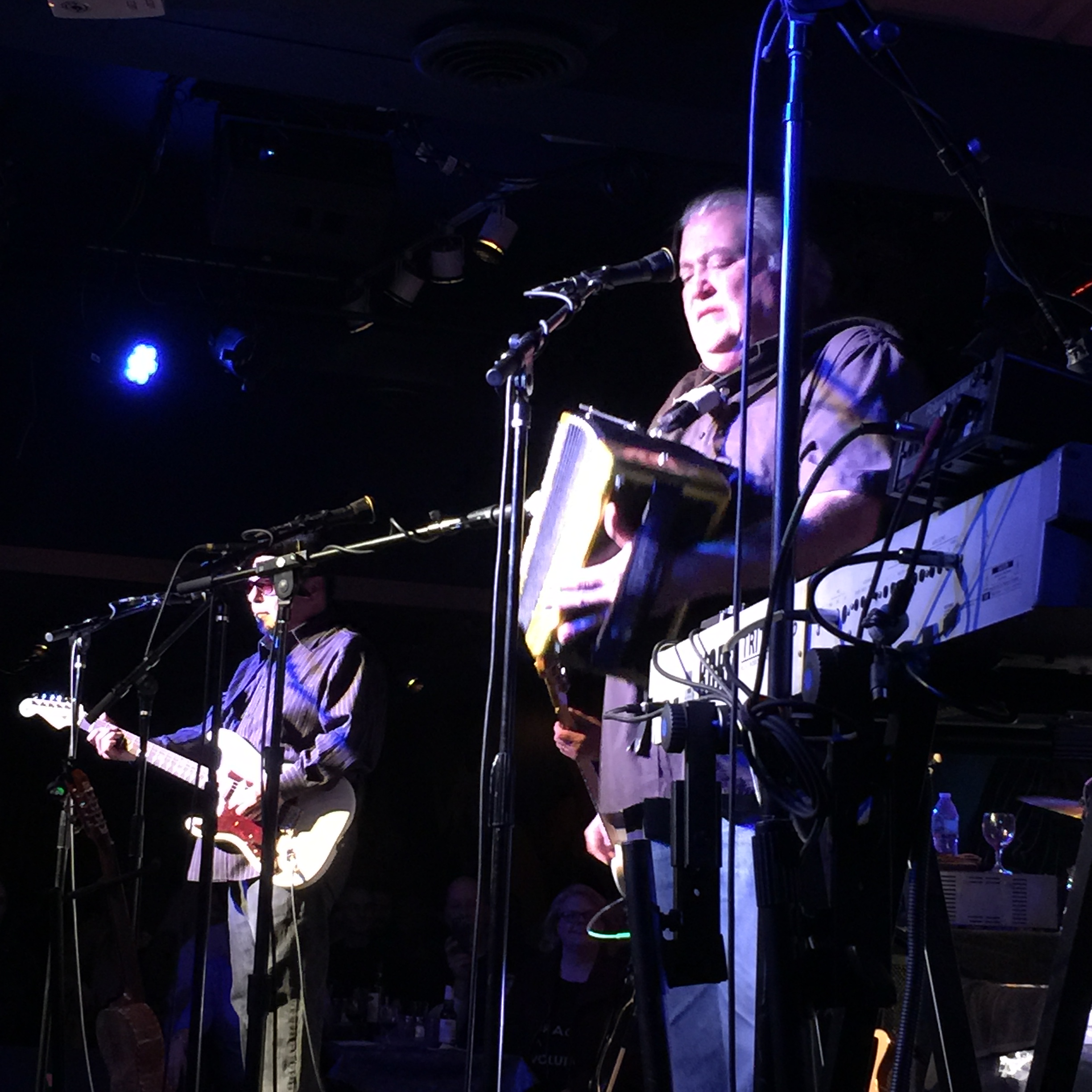
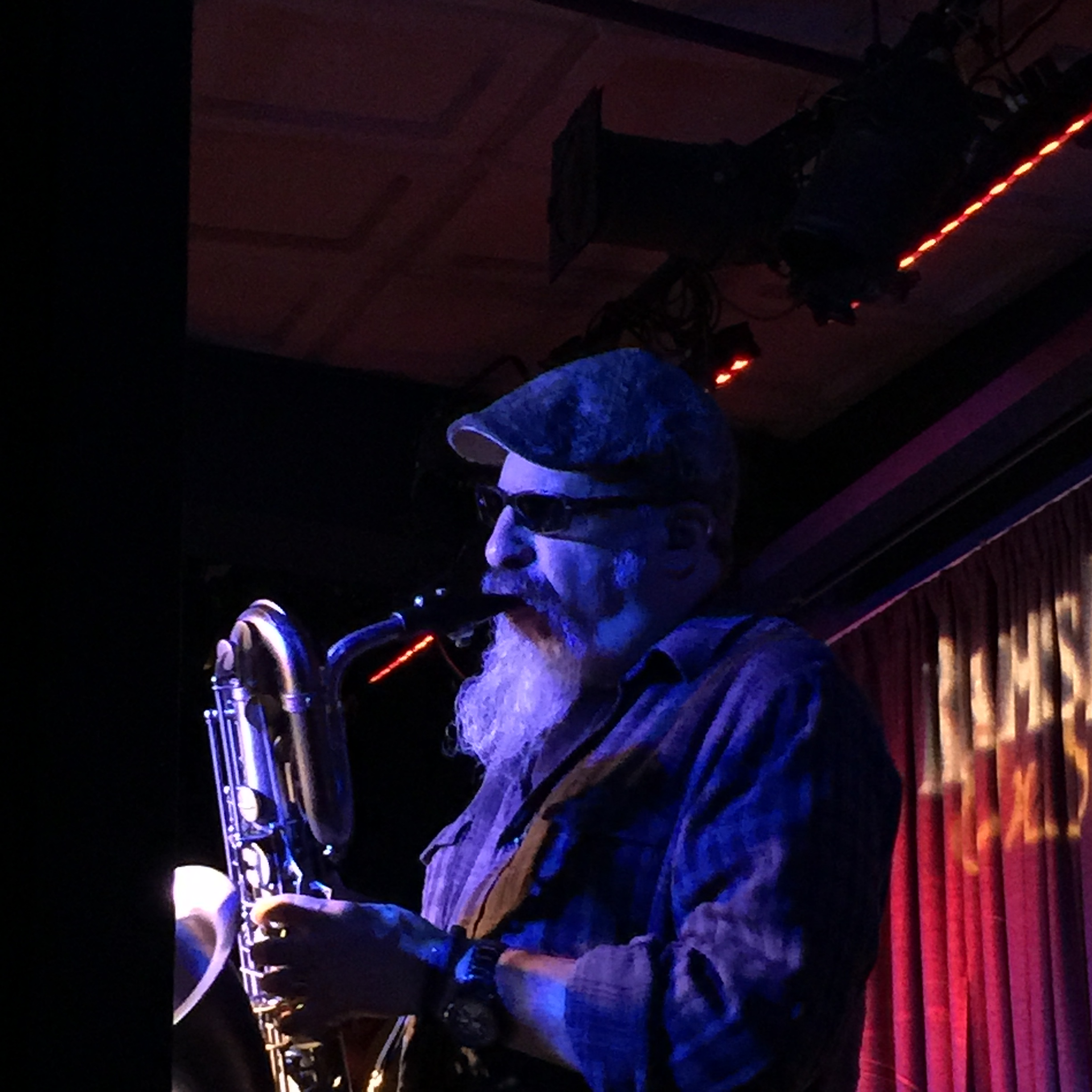
Formed in 1973 but not coming into national recognition until 1983’s “…And A Time To Dance”, Los Lobos has kept the same set of four musicians for that entire time: David Hidalgo on guitar and accordion, the sunglasses-clad Cesar Rosas on guitar, Louie Perez on guitar, Conrad Lozano on bass, all of whom met in high school in East Los Angeles. Saxophone, flute and keyboards virtuoso Steve Berlin jumped over from the Blasters to Los Lobos 1984 to complete the core band that has now held constant for three decades.
Over the years, Los Lobos have continued to be critics favorites and a sparkling live act and long after the bright “La Bamba” lights have faded, Los Lobos have continued to make album after album of subtle, powerful, nuanced rock influenced by their East LA background to a core group of devoted fans.
But it’s really their live shows where Los Lobos has made their career. They play without a setlist (or a net, for that matter). It appears that they tend to know what the first two or three songs of a set are going to be and then they feed off the crowd and depending on how the crowd responds they move off in that direction. Sometimes their shows are merely very good, sometimes they are brilliant with moments of musical transcendence, especially when Hidalgo is feeling inspired.
Hidalgo and Rosas trade off vocals from song to song, with Rosas doing more of the Norteno and gruffer blues vocals and Hidalgo’s heartbreaking tenor voice carrying off the more poignant ballads and mid-tempo numbers. Hidalgo is an amazing soloist on guitar and accordion and as a singer he is a real revelation, a shy mountain of a man with a gorgeous voice capable of pain and joy, sometimes simultaneously.
When you watch a Los Lobos show, you are taken with how clearly each musician is listening to the other musicians and adjusting their playing in and out of the melody around each other as if they are engaging in an intertwined musical dance.
The other thing you notice is that they’re still pushing themselves musically to find both new colors and moods from the older songs. Most bands forty years into their careers are just going through the motions, playing the hits like a jukebox for the crowd. Los Lobos shows, though, are a celebration of the power of music to continually reinvent itself as the musicians weave and out of each musically in new arrangements pushing each other to find something new out of the old songs.
They still play with a power and a passion belying their years which was testified to by the two sets they played to appreciative crowds in Annapolis, Maryland at the Ramshead on Feb 27. I saw the late set (musicial tip: always hit the late set for any band playing two sets) and once again they did not disappoint.
They played a roughly one hour forty-five minute set that covered their entire career and jumped in and out of every style and genre they play, with maybe a slight emphasis on the jazzy side of the blues. The highlight to me was a showstopping version of the Billy Myles blues standard “Have You Ever Loved A Woman” made popular by Freddie King in the early 1960s, with a solo by Hidalgo that figuratively nearly caught his guitar on fire.
Other highlights were “I Can’t Understand”, “Maricela”, a really nice ten-minute version of the Grateful Dead’s “Bertha”, and every song where Hidalgo played accordion. He has to be the best accordionist in the blues/roots scene.
Los Lobos play music not because they’re trying to be cool or trendsetters. They’re not trying to have another big hit. Los Lobos play music because they’re true musicians, and playing music is what musicians do.
Catch Los Lobos when they come to your town. They are true American originals.
Below is a clip from the show with Rosas doing lead on a cover of “Papa Was A Rolling Stone” then “I Can’t Understand” followed by Hidalgo taking the lead on “Down On The Riverbed”.
Scottish indie rockers Idlewild return with their eighth album – Everything Ever Written. Since their last album, frontman Roddy Woomble released his second and third solo albums which disappointed (his first was superb) so expectations were low for Everything Ever Written. Instead they have delivered an excellent album which mixes the best of Woomble’s solo folk work with Idlewild’s familiar rock.
Collect Yourself is a good rocky opener and is followed by single release Come on Ghost. The single was enjoyable, and it was good to hear Woomble’s distinctive voice back once again on an Idlewild song. But it sounds poorer when heard in the context of the album; it lurches along at an uneasy pace and is easily surpassed by other tracks on the album as a single choice.
The standout track, and obvious single choice, is Nothing I Can Do About It. This is Idlewild doing ‘big music’ and doing it brilliantly. Big guitars, galloping drums, some Elbow-esque strings and a sprinkling of piano all add up to a huge sound, but the female backing vocals are what really elevate the song, in the choruses and the wonderful “ooh ah, ah, ah’s” in the outro.
The second highlight is (Use It) If You Can Use It. This is one of a couple of tracks where Woomble’s voice has a much more laid back quality than usual, but still manages to retain his distinctive tone. The song has shades of The Charlatans’ North Country Boy, which is a good thing, and it has an epic playout, an almost live jam affair, with funky bass, soulful keys, piano, horns, squealing guitar, and maybe even the kitchen sink in there somewhere.
If you’re still looking for the Idlewild of old, look no further than On Another Plant, the rockiest track from the collection which burns out beautifully.
Lyrically the album is more mature than before, no doubt down to the band nearing middle age. There are songs of regret and bitterness, beside songs about accepting and even embracing old age. Some of the more obvious examples include “You know I worn out my ambitions, I soaked them in wine”, ” In my dreams I am always young”, “Do you ever get the feeling that I made important decisions far too late in life” and the simple but effective chorus “There’s nothing that I can do about it”.
I don’t ‘get’ all the lyrics though, and I wish I could figure out Radium Girl, because it’s a great song which adds to a strong finish to the album, which includes the atmospheric piano and vocal number Utopia;the perfect ending to a highly enjoyable experience.
Somewhere along the winding gravel road of Bob Dylan’s MusicCares Person Of The Year acceptance speech, he mentioned something that I think is profound.
The term “Hillbilly Music” was coined by Al Hopkins in the 1920’s and continued in use until the late 1950’s. Dylan credits the Delmore Brothers, the Stanley Brothers, Roscoe Holcomb, and the Skilletlickers in his speech as examples but they aren’t the only ones. The music itself, grown in the hills of Appalachia is a melting pot of music bringing together the music from everyone who settled America. Although originally spanning gospel to Celtic and everything in between, the music became more synonymous with old time and bluegrass musics. Films like “O Brother” have brought attention back to the music.
Grown in the hills and country, the music came to the city where it attracted new attention and sophistication. Bands like the Country Gentlemen from Northern Virginia, The New Lost City Ramblers in New York City played traditional American music to a whole new audience.
Here is a cut from another New York City group, the Greenbriar Boys. John Herald, Ralph Rinzler, and Bob Yellin started playing in the Greenwich Village area. They opened for and provided backup for Joan Baez. Given the folk circuit of the day, they certainly played along side Bob Dylan as he first showed up in New York. This cut, “Russian Around” is one of my favorites. A simple instrumental featuring banjo and guitar, I think it’s significant because it has one of the earliest guitar breaks I can think of that effortlessly mixes cross picking and single string styles. Although you hear similar breaks today, this is really a ground breaking instrumental.
English guitar phenom Joanne Shaw Taylor takes Annapolis by storm in support of her new album “The Dirty Truth”
It wasn’t all that long ago that the blues was a prominent part of the music scene, with the stars of the blues scene being household names in the general public. Young rock musicians, who learned to play by spinning the albums from the blues masters and trying to copy what they heard, revered blues guitarists and treated the albums as sacred artifacts.
As long as people experience love and loss, and the eternal struggle between the sacred and the profane, the blues will never die. In 2015, however, the blues scene has fragmented into any number of niches, each with a small but dedicated set of followers, and the stars of the genres seem to be known mostly only within the larger blues community. Blues 2015 seems to be defined by rigid rules and styles, at times seeming almost a formalistic exercise in style where both the artists and the audience know exactly what’s expected of them.
But a genre as hoary as the blues can still surprise. One of the surprises to me over the last decade is how vital the European blues scene has become. There are summertime folk/blues festivals throughout Europe, and the fan base seems to be as fervent there, especially with young people, as anything in the US. On a business trip a few years back to Moscow, Russia, I serendipitously caught a local blues festival and was really surprised by how much the young people were into it as if it were a new thing being freshly invented.
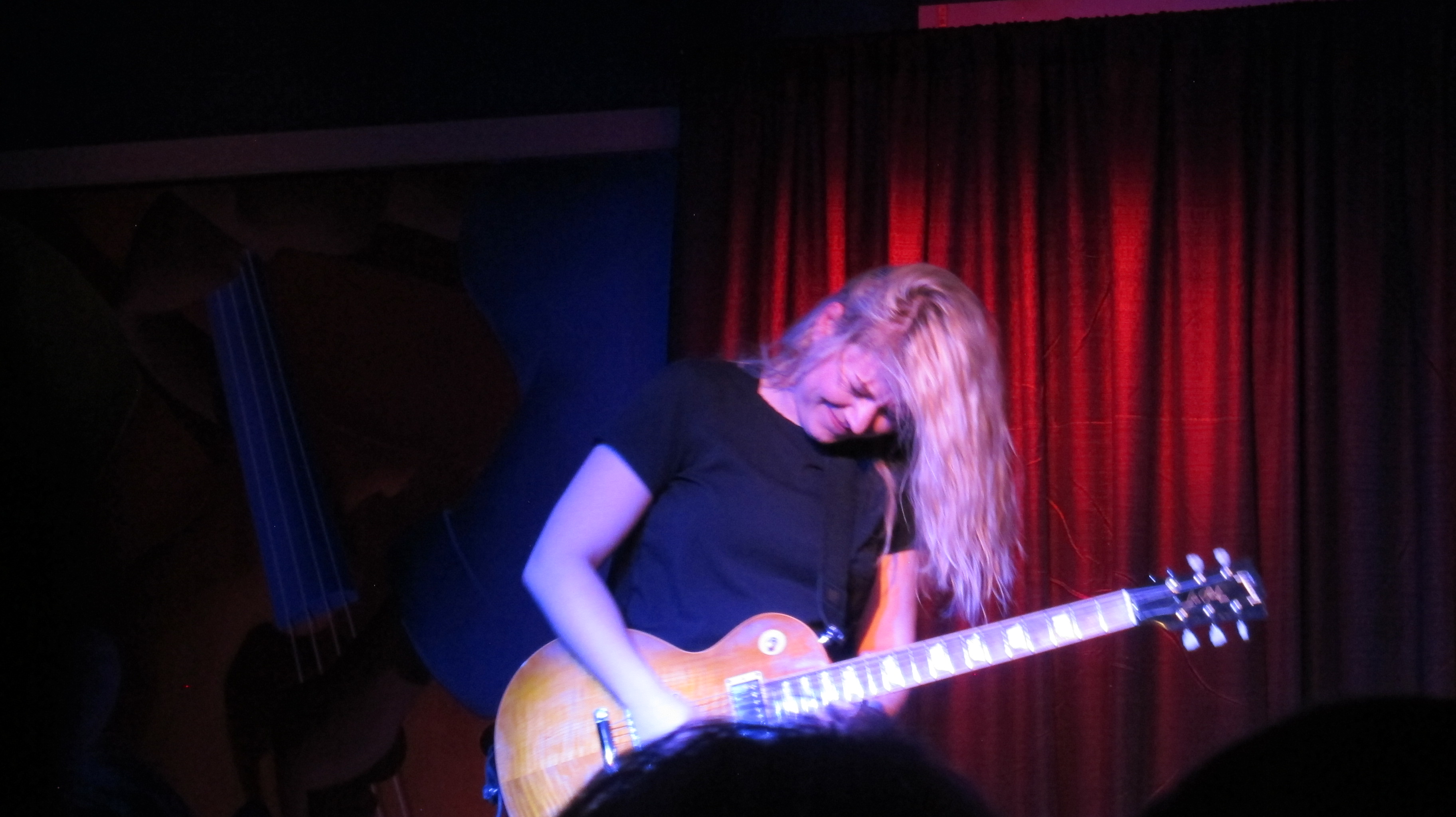
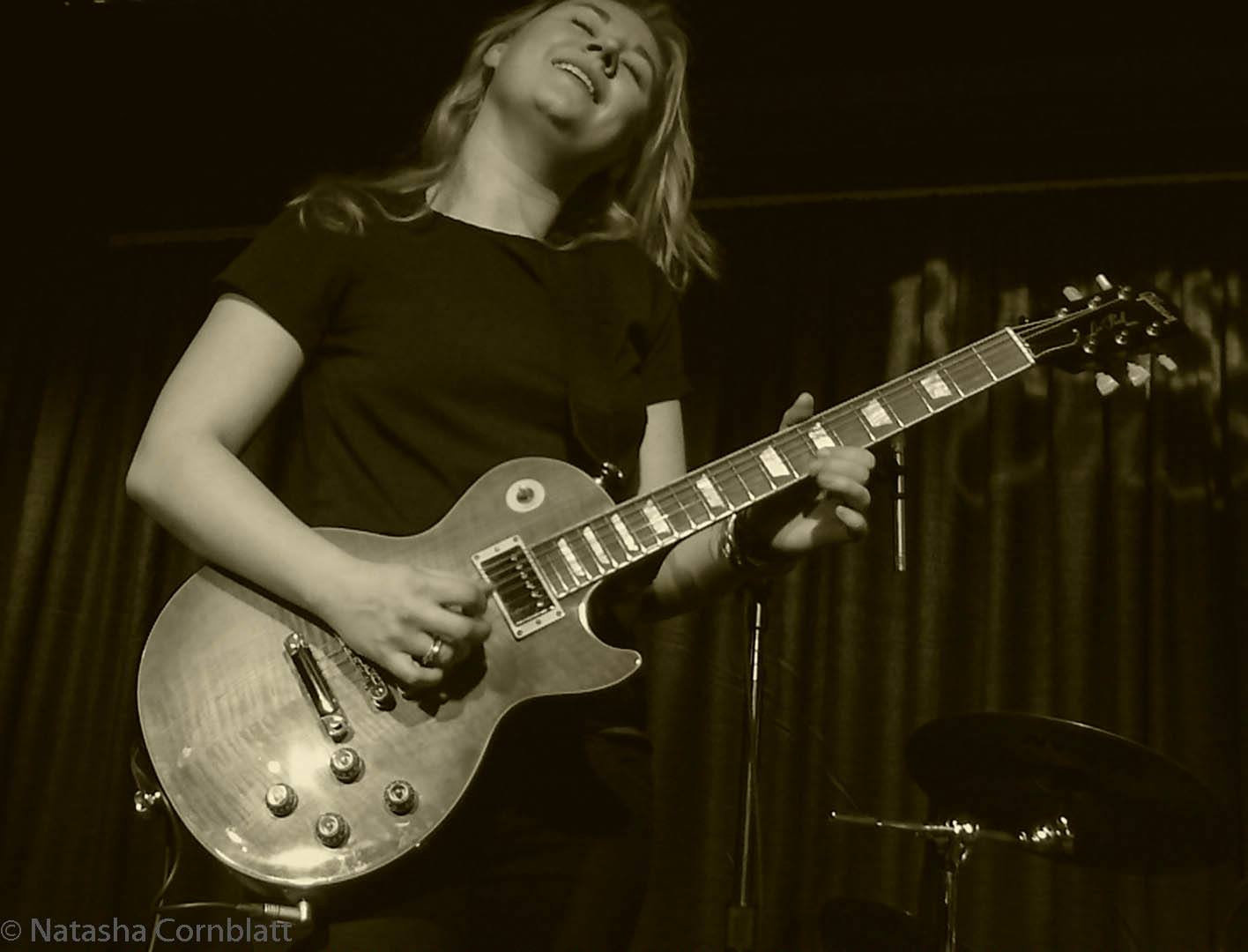
An even bigger surprise to me is how many of the young European blues guitarists are female. Two of the most well-known of this new breed are Serbian whiz Ana Popovic and England’s Joanne Shaw Taylor, the latter of whom played a terrific set on Wed 2015/02/11 at the Ramshead in Annapolis, MD in support of her excellent new album “The Dirty Truth”.
I’ve followed Ms. Taylor’s career since her 2009 debut with “White Sugar” but last week’s show was the first I saw in person. She really is as good as advertised, and I would strongly recommend seeing her if you’re interested in what 2015 blues and boogie-rock sounds like.
Taylor eschews the typical pitfall of young blues phenoms of always trying to play as fast and loud as she can. Instead, she employs a style that is supple, melodic, and lyrical, while retaining all of the power. Although there were occasional times where she just threw down a monster solo on her Les Paul, far more often she let the melody and music take her at their own pace, with her soloing and riffing style in service of the music, rather than vice versa.
Backed by an able rhythm section from Detroit, she ran through selections from her entire career from “White Sugar”, “Diamonds In The Dirt” and “Always Almost Never” although she did focus on songs from the new album “The Dirty Truth”.
In addition to her sparkling guitar playing, Taylor is an engaging vocalist, with a whiskey-soaked voice belying her years and an expressive phrasing that has obviously been honed by years on the road.
Highlights to me were “Diamonds In The Dirt” as well as “Mud Honey” and “Tried, Tested and True” from “The Dirty Truth”.
If Taylor is an example of the hands into which the blues have been entrusted in 2015, then the statement that the blues will never die may just turn out to be true. If those hands happen to be young, white, female and English all the better.
If you ever get the chance to see Taylor in concert, by all means do so. She’s the real deal.
Back in 1948, Samuel Goldwyn got a big idea to do a remake of the Gary Cooper flick “Balls of Fire”. He wanted to showcase the top talent of the day, and also wanted to get Danny Kaye out of a funk after Danny left his wife. The result was nothing short of complete MGM/RKO style awesomeness.
What happens when you put the following people all in the same room –
Danny Kaye, Benny Goodman, Louis Armstrong, Lionel Hampton, Charlie Barnet, Tommy Dorsey, Mel Powell, Alton Hendrickson, Louis Bellson, Harry Babasin, Russo & the Samba Kings, and the Golden Gate Quartet…..
…..and throw in a little Virginia Mayo for some eye candy as well?
I am not quite at liberty to say in as few words, but I’ll say this for sure – A Song Is Damn Well Born.
First off, in the spirit of transparency and full disclosure, I must admit that I was raised on Tom Waits songs. Yes, the singer/songwriter who has given us such great lines as:
Paws his inside P-coat pocket for a welcome twenty-five cents,
And the last bent butt from a package of Kents,
As he dreams of a waitress with Maxwell House eyes
And marmalade thighs with scrambled yellow hair.
the classified section offered no direction
it’s a cold caffeine in a nicotine cloud
now the touch of your fingers
lingers burning in my memory
I’ve been 86ed from your scheme
I’m in a melodramatic nocturnal scene
I’m a refugee from a disconcerted affair
as the lead pipe morning falls
and the waitress calls
Well he came home from the war
with a party in his head
and modified Brougham DeVille
and a pair of legs that opened up
like butterfly wings
and a mad dog that wouldn’t
sit still
he went and took up with a Salvation Army
Band girl
who played dirty water
on a swordfishtrombone
he went to sleep at the bottom of
Tenkiller lake
and he said “gee, but it’s
great to be home.”
He has no friends
But he gets a lot of mail
I’ll bet he spent a little
Time in jail…
I heard he was up on the
Roof last night
Signaling with a flashlight
And what’s that tune he’s
Always whistling…
What’s he building in there?
What’s he building in there?
So it takes a lot to make me go “hmm?” when I’m listening to music these days (okay, so I will also admit to it taking me at least two playings of each Waits album before I totally get all his lyrics 😉 )
What is music these days? Catchy “beats” created on electronic boxes awash with switches and dials where the lyrics leap at you? Real instruments played with heart where the lyrics are just along for the ride? MOR combinations of riffs and lyrics that are so formalistic you can swear they must have come out of a MIT-created hit song generator?
Yes, the current musical scene does appear rather bleak from my lyrical seat in the stands. Is there hope for us after all? For your consideration, I present the following:
“I’m a happy idiot waving at cars”
“When I say nothing I say everything”
“We all sing along but the notes are all wrong”
“Why do you only call me when you’re high?”
“Even Da Vinci couldn’t paint you
And Stephen Hawking can’t explain you
Rosetta Stone could not translate you
I’m at a loss for words, I’m at a loss for words
I couldn’t put it in a novel
I wrote a page, but it was awful”
“I’m on a train, going nowhere
I ran away, to make you care
This ain’t my house, this ain’t your home
Not when I’m feeling, this alone”
(TOTR, Jack White, Matt&Kim, Arctic Monkeys, Weezer, Royal Blood)
What do you think? Me? I’m going back to listen to my Waits albums and maybe dip into some old school hip-hop (Naz and Rakim, anyone?)
It’s hard to believe this is Belle and Sebastian‘s ninth studio album, but then I still think of them as a new band, when actually next year (2016) will see their 20th anniversary.
Nobody’s Empire kicks off the album in typical Belle and Sebastian style, gentle and melodic with personal, confessional lyrics. The rest of the album is not as typical, in fact it is eclectic to say the least. After second track Allie it goes all dance, in a definite departure from their usual style. The Party Line has throbbing bass and funky guitar, and Enter Sylvia Plath is, dare I say it, full on Eurovision. The electronic songs, of which there are several, have a slightly Pet Shop Boys feel; perhaps after eight albums they’re going after a little more mainstream success or more likely they just wanted to make an album you can dance to. Not that you couldn’t dance to their previous releases and I’ve always imagined the average Belle and Sebastian fan enjoys dancing alone to them in their bedroom.
It’s not all synth pop though and there’s plenty to keep those looking for the classic Belle and Sebastian happy, like Ever Had a Little Faith? (which could have come right out of a Belle and Sebastian song name generator).
Other highlights are the blistering guitar outro on The Book of You, The Cat With The Cream with its delightful strings and vocal harmonies, and the jazz/Cossack hybrid of The Everlasting Muse. I told you it was eclectic!
Official video for Nobody’s Empire. Contains some nice vintage clips of Glasgow, including a couple of shots of the city’s greatest artwork:
Sleater-Kinney return after a decade’s hiatus with the best album of their career.
When a band reforms after a long layoff, there’s always a bit of trepidation. For every example of a successful reunion that results in an album that’s a welcome addition to a band’s canon, such as Big Country’s “The Journey” or Toad The Wet Sprocket’s “New Constellation”, both from 2013, there are many more examples where the band was obviously unable to catch the previous magic and frankly embarrasses themselves.
Rarest of all is the case where a reunited band creates the best work of their career, which is exactly what Sleater-Kinney have done with their outstanding new album “No Cities To Love” on Sub Pop. “No Cities” is the most assured, confident and accessible album of their career, and may stand as a career-defining work for this three-piece from the Pacific Northwest.
Background: Sleater-Kinney was the most proficient and well-known band to come out of the 1990s seminal “Riot Grrrl” movement. “Riot Grrrl” was a broad label applied to a group of post-grunge female alternative bands, primarily based out of the Seattle scene such as Sleater-Kinney, Bikini Kill and Bratmobile. Riot Grrrl was as much a political movement as a musical one, featuring a feminist political stance and a DIY aesthetic.
Sleater-Kinney (named after an Interstate exit near Lacey, Washington where the band practiced) consists of Corin Tucker (vocals and guitars), Carrie Brownstein (guitars and vocals) and Janet Weiss (drums). Sleater-Kinney released seven well-regarded albums between 1995 and 2005 starting with an eponymous debut in 1995 and ending with “The Woods” in 2005. After breaking up, Tucker continued to play with various bands, and Brownstein/Weiss went on to form a band called Wild Flag that released a well-reviewed album in 2010. Of course, the most visible project from any of the members has been Brownstein’s turn as half of the creative team behind the satirical “Portlandia” TV series with her partner Fred Armisen.
Always a critical favorite, their influence was disproportionate to their commercial success, with their highest charting album being “The Woods” at number 80 on the US charts. However, their influence was felt throughout the indie/alternative scene throughout their career, influencing bands from L7 and Hole to No Doubt. Sleater-Kinney featured the interplay between Tucker’s dramatic vocals, variously shouted, yelped and sung at top of her range reminiscent of PJ Harvey, over Brownstein’s angular, skittering and alternately heavy and sludgy guitar (and occasional vocals) and anchored by Weiss’s solid and metronomic drums.
I admit I was slow in climbing on the bandwagon. From the start, I recognized what they were attempting to achieve, agreed that they were hitting their mark, and that what they were doing had value. Truthfully, though, although I liked individual songs from them I never really clicked on an entire album from them until their fifth album “All Hands On The Bad One” from 2000. I suppose that I liked the idea of early Sleater-Kinney better than the actual thing until I finally caught up to what they were (and now are again) doing.
I saw them live once, and they were just a crashing wall of sound. I only really remember two things: Janet Weiss bashing the drums like a maniac, beating them as though they’d crashed her car, and the way that Brownstein/Tucker traded off lead guitar licks, and without a bass player in the band one of them (usually Tucker) would occasionally play bass lines on the guitar. I liked that – it’s always good to remind bass players that they are optional. Here’s a linked overview that gives you some of the history if you’re unfamiliar with them:
Which brings us to “No Cities To Love”. This album is a 33-minute, 10-song revelation, if not revolution, full of ferocious and inventive riffs, licks and melodies. The guitar tones draw as much from Gang Of Four, Wire, and Television as they do anything from 90s or 00s alternative. The guitars can veer from Sabbath-esque sludge to post-millenial Futureheads/Editors within a single song, reaching all the way to pre-synth Devo or early B-52s on occasion. Tucker’s (and occasionally Brownstein’s) quasi-operatic vocal prowess is undiminished, Weiss’s drumming is outstanding, with lots of quirky polyrhythmic touches to complement her jackhammer style.
The lyrics show a mature self-awareness and multiple shadings whether discussing domestic life and the struggles to make ends meet – and also maybe also the price of fame – (“Price Tag”) or “Fangless”’s kissoff to an unnamed person that also hints at regrets for their past (“Where’s the evidence, the scars, the dents That I was ever here?”). Perhaps the most curious lyric is on the title track. Given the identity that the band has with the Pacific Northwest, it’s strange to hear them sing “There are no cities, no cities to love; it’s not the city, it’s the weather we love!” The implication is that all cities are the same, it’s only the geography that matters, but given how specifically they have been tied to Seattle in the past and of course now Portland due to Portlandia, I don’t quite get the lyric.
But I digress.
The album leads off with “Price Tag” which sets the tone for the full album, full of spiky, quirky and occasionally atonal guitar lines, straining vocals and a bludgeoning drumline. “Fangless” is built around a classic S-K swirling guitar figure. “Surface Envy” (featured live on their recent Conan O’Brien performance) has demented guitar accents that squonk and squeal and a descending guitar line over a classic alternative sing-along chorus.
“No Cities To Love” is perhaps the most memorable song on the album. Over a propulsive beat and bass-line played on guitar and another bouncy, spiky guitar riff, the song has a great bridge and chorus that is instantly memorable and will have you humming it all week. “A New Wave” and “No Anthems” complete a strong three-song mini manifesto at the center of the album. Brownstein sings the galloping beat of “A New Wave” with punky enthusiasm “It’s not a new wave it’s just you and me….invent our own kind of obscurity” and it’s clear that although she’s become best known as a comic actor on Portlandia she can still bring the noise.
“No Anthems” is a bit of misnomer; the bridge/chorus are as anthemic in their own way as anything they’ve ever done. “Bury Our Friends” is another winner. Spitting furious lyrics over insistent guitar lines, it’s a call to action, a manifesto that rings as true as anything they’ve ever done while lamenting the passage of “our own gilded age”.
The album runs out of breath a little bit in the last two songs, but with the first eight songs being as enjoyable as they are, “No Cities To Love” is already a candidate for rock album of the year. Welcome back, ladies, we missed you. Download: “Price Tag”, “No Cities To Love”Score: 9 Suns out of 10.





 See The Sun In Wintertime