Album Review: The Waterboys – Modern Blues

Mike Scott and company release their freshest album since Fisherman’s Blues with a focus on sharply-observed lyrics and accessible tunes

Mike Scott and The Waterboys are one of music’s most enigmatic and interesting acts. In their three decade career going back to their 1983 eponymous debut, Waterboys (and Scott solo) albums are always marked by intricate, poignantly poetic lyrics combined with outstanding musicianship.

On their first three albums (The Waterboys, 1984’s A Pagan Place and 1985’s This Is The Sea) the Waterboys were often grouped together in with U2, Big Country, The Alarm and Simple Minds in what was called the Big Music movement (after a song on A Pagan Place). More a convenience for journalists than a conscious music collective, the description fit though and stuck through the 1980s; these five bands were writing songs based on Big Ideas of spirituality, politics and the politics of love in a complex, soaring, anthemic way that was in another universe than the vapid pop of the day. The music was uplifting, the singing was passionate, the lyrics were mind-expanding and no band exemplified this spirit better than the Waterboys, culminating for me with one of the 10 best songs of the 1980s, This Is The Sea’s “The Whole Of The Moon”.

After this opening trilogy of albums, Waterboys founding member Karl Wallinger (late of World Party) and others departed the band, and Scott and the Waterboys relocated to Ireland and took a hard right turn into a more rustic Celtic style for the stone-cold classic 1988 album Fisherman’s Blues and its raggle-taggle followup, 1990’s Room To Roam. This was an extremely fertile time for the now-sprawling combo as shown by the magnificent six-disc version (!) of Fisherman’s Blues released in 2013 that showed the depth of the work that they were doing in that period. This version of the band is one of my favorite groups of all time.

In 1991 Scott broke up this version of the Waterboys (as he is want to do from time to time), moved to New York and essentially restarted the band from scratch, with a more conventional rock electric sound that continues on to this day with a focus on exquisite word play and a harder-edged sound starting with 1993’s Dream Harder.

In the 22 years since Dream Harder, Scott has released two major solo albums and by my count eight studio Waterboys albums that have all been consistently high quality additions to the catalogue and solidify Scott’s place as one of the great writers of the rock era bringing to mind comparisons to Dylan and Morrison (Van, not Jim).

I admit that from time to time as Scott has delved deeper and deeper into literary allusions and mystic references, he sometimes has gone so deep as to risk losing even some of his devoted fans like me. For every accessible album like 1997’s solo Still Burnin’ or 2007’s Book Of Lightning, there are more impenetrable albums like 2003’s Universal Hall or 2011’s An Appointment with Mr. Yeats, (based on the poetry of William Butler Yeats) that are carefully crafted but so personal to Scott that I personally find them to be difficult listening. At his most obscure, the literary allusions, location references and mystic quotes that I understand only highlight how much of his writing that I don’t understand. I’m convinced that Scott is a lyrical genius even if I don’t understand the half of what he’s on to.

Live, Scott and the Waterboys are one of the most interesting bands going. I’ve seen them probably a dozen times over the years and no two shows have been the same. More than most musicians, Scott channels his muse in his live shows and it can be a remarkable experience to witness. I’ve seen Scott rapturous, expansive, mercurial and funny on stage, and I’ve also seen him angry and churlish; but, never anything other than absolutely authentic.

At their best live, it is as if each musician is not playing their own instruments, but rather the instruments of the other band members around them. It’s hard to explain, but startling to watch, particularly as they play within rhythms, melodies and tempos within a single song. It’s what every jamband aspires to, but the Waterboys at their best are effortless at at it. Their Washington DC show in the weeks after 9/11 was maybe the most empathic show I’ve ever seen both within a band and between a band and an audience.

On their Fall 2013 US tour, I was delighted to hear some new songs and a new direction in their music, which brings us to the nine songs on their excellent new album Modern Blues, released in the US on 2015-04-07.

Recorded in Nashville with American session musicians and long-standing musical ally Steve Wickham on violin, Modern Blues is Scott’s most consistently successful album in years, rating with the best work in his canon.

Modern Blues shines the spotlight on some of the sharpest, most observant and incisive lyrics of Scott’s long career. The music serves to support and highlight the lyrics, and the lyrics demand to be heard. They are more personal and less literary (and thus more universal) than much of Scott’s recent work; they really are more like poems set to music than traditional rock songs.

More than just the words themselves it is the way that Scott enunciates, pronounces and accents the words shows the exacting and precise placement of the writing. There’s not a single sloppy or excess word, even though some of the couplets are stuffed to the brim.

Released in the US a week after Courtney Barnett’s Sometimes I Sit And Think And Sometimes I Just Sit, Modern Blues is an interesting counterpoint. Barnett seems to work hard to have a spontaneous stream-of-conscious, nearly throw-away style to her lyrics that belies the obvious care and craft that she’s put in, whereas with Modern Blues Scott let’s you see the meticulous, crafted brilliance he’s employed throughout.

Whether it’s a quick line like his description of Elvis Presley as “razor-quiffed and leather-squeezed, sideburns flickering in the breeze” in his vision of musicians and famous figures mixing together in the afterlife in I Can See Elvis, or the extended excellence of “The Girl Who Slept For Scotland”, each song has at least one lyrical sequence that pops out to you as you hear it.

“The Girl Who Slept For Scotland” is a sly, lyrical standout from start to finish. Based on the light-hearted title and chorus, it sounds like sort of a throwaway until you hear his description of a sexual tryst:

“…When we sang in tongues together and our synchronized guitars

Played music to the rafters and made love among the stars

And our bodies beat like light in love’s beautiful embrace

As her tiny kisses burst like popping suns around my face

But then drift, recline, collapse, the lights went out, she fell asleep again

Before my kiss-wet face was even dry”

Or try this verse I’m picking at random from the first single, Beautiful Now”:

 “Look down a carousel of years and darling there you are

A Dancer crying salty tears, a Vagabond, a Star

The Slayer of Mediocrity, of every sacred cow

You were beautiful then, sweet angel

You’re way more beautiful now”.

However, before you think that this is one of Those Difficult Albums That Are Hard Work To Listen To, this is actually perhaps the most accessible Waterboys album musically since Fisherman’s Blues. Whether it’s the up-tempo romp of the opener “Destinies Entwined”, the mid-tempo ballad “November Tale”, the jaunty and self-deprecating “Still A Freak”, the doo-wop vocals and handclaps of “I Can See Elvis”, or the gentle slow-dance elegy of “Nearest Thing To Hip”, this is inviting and entertaining music.

Beautiful Now” is probably the most poppy and dare I say radio-friendly single from Scott in years, with a bouncy beat, organ and backup vocals over an innocuous hook and melody that rewards repeated listening. In a more just world, this would be a hit on Adult Alternative Radio in the US.

Before I nominate Scott for sainthood, I personally didn’t think that “Long Strange Golden Road” needed the sample of Jack Kerouac reciting from “On The Road”, and I personally found the kissoff to a romantic rival in “Rosalind (You Married The Wrong Guy” to be too vitriolic to be appealing on repeated listens.

However, these are minor quibbles in what is otherwise a thoroughly enjoyable, likable album from start to finish, and for me it’s bound to be one of the notable albums of the year.

The album is scheduled to be on streaming services in the US as of 2015-04-07, but in the meantime you can find the album as a YouTube streaming playlist at:

Mr. Scott – feel free to continue making Big Music for the next three decades as well. I know that you never went away, but welcome back anyway.

Download: “Beautiful Now”, “The Girl Who Slept For Scotland”. Score: 9 Suns out of 10.

sun-graphic_yellowsun-graphic_yellowsun-graphic_yellowsun-graphic_yellowsun-graphic_yellowsun-graphic_yellowsun-graphic_yellowsun-graphic_yellowsun-graphic_yellowdc7ejqKc9

Waterboys-MODERN

My Mixtape Is Fire – March 2015

1

Back in the analog pre-Internets days it’s hard to overstate how important mixtapes were.

Whether they were for your friends in order to introduce them to new music or for long drives on lazy summer days, or (infinitely more importantly) whether they were to try to impress that One Special Girl to whom you had So Much To Tell but was afraid to speak to, mixtapes were a labor of love 45 minutes to a side.

They took a while to make because you were dubbing in real-time (hi-speed dubbing cut down on the cassette tape audio quality which seemed so important at the time) which gave you time to think about both the songs and the person for whom you were making it (did I mention that One Special Girl?) and of course there was the cramped writing that you had to do on the cassette insert in block cap letters. It was desperately important that the lettering be in block cap letters for reasons that now escape me.

When CDs supplanted mixtapes the idea was still the same, although the process was much faster because you were just burning a playlist to disk. They seemed more disposable and less a labor of love but they were still fun.

Before streaming services the idea had sort of gone out of style unless you wanted to e-mail a bunch of files to accompany a playlist or were a rapper “poppin’ the trunk” but now that streaming services are common I think it’s time to resurrect the mixtape for the streaming age.

Several “One Special Girls” have come and gone, but the fun of making mixtapes remains.  They may be just Spotify playlists now, but to me they’ll always be mixtapes.  Here’s one for March 2015 with mostly recent stuff. Throw it in a playlist in Spotify and see what you think. Enjoy!

===================

1. Public Service Broadcasting – Gagarin

2. Simple Minds – Let The Day Begin

3. Toad The Wet Sprocket – New Constellation

4. James Bay – Hold Back The River

5. Death Cab For Cutie – Black Sun

6. Houndmouth – Sedona

7. Modest Mouse – Lampshades On Fire

8. Florence & The Machine – What Kind Of Man

9. Andrew McMahon In The Wilderness – Cecilia And The Satellite

10. Catfish & The Bottlemen – Kathleen

11. Shakey Graves – Dearly Departed

12. Alabama Shakes – Don’t Wanna Fight

13. D’Angelo – Sugah Daddy

===================

Gig review: Los Lobos – Annapolis, MD – 2015-02-27

Forty years on, Los Lobos have not only survived, they still howl.

There is something noble about seeing a professional working band in the October of their careers, especially a band as great as Los Lobos.   Their brilliant 1984 major label debut asked the question “How Will The Wolf Survive” and the answer 31 years later is “quite nicely, thank you”.

Los Lobos have constructed a career out of constant touring and remain consummate musicians, able to turn on a dime from roots-Americana to roadhouse blues to jazz to Norteno to jamband riff-rock. To me Los Lobos are the consummate American band, and possibly one of the most underrated American bands of all time. I’ve never seen a band proficient in so many different styles and moods.

I have seen them live on the order of twenty times in their career going back to the mid-80s when they were part of the Los Angeles roots and punk scene, opening for bands as diverse as the Blasters, X and Black Flag. I can honestly say I’ve never seen two Los Lobos shows that were alike.   I have seen them play their 1987 fluke #1 US hit “La Bamba” three times in a show in three different styles, some shows where they don’t play it all; some shows where they stuck to Norteno music, some where they played nothing but blues, some where they played mostly covers including Grateful Dead songs.

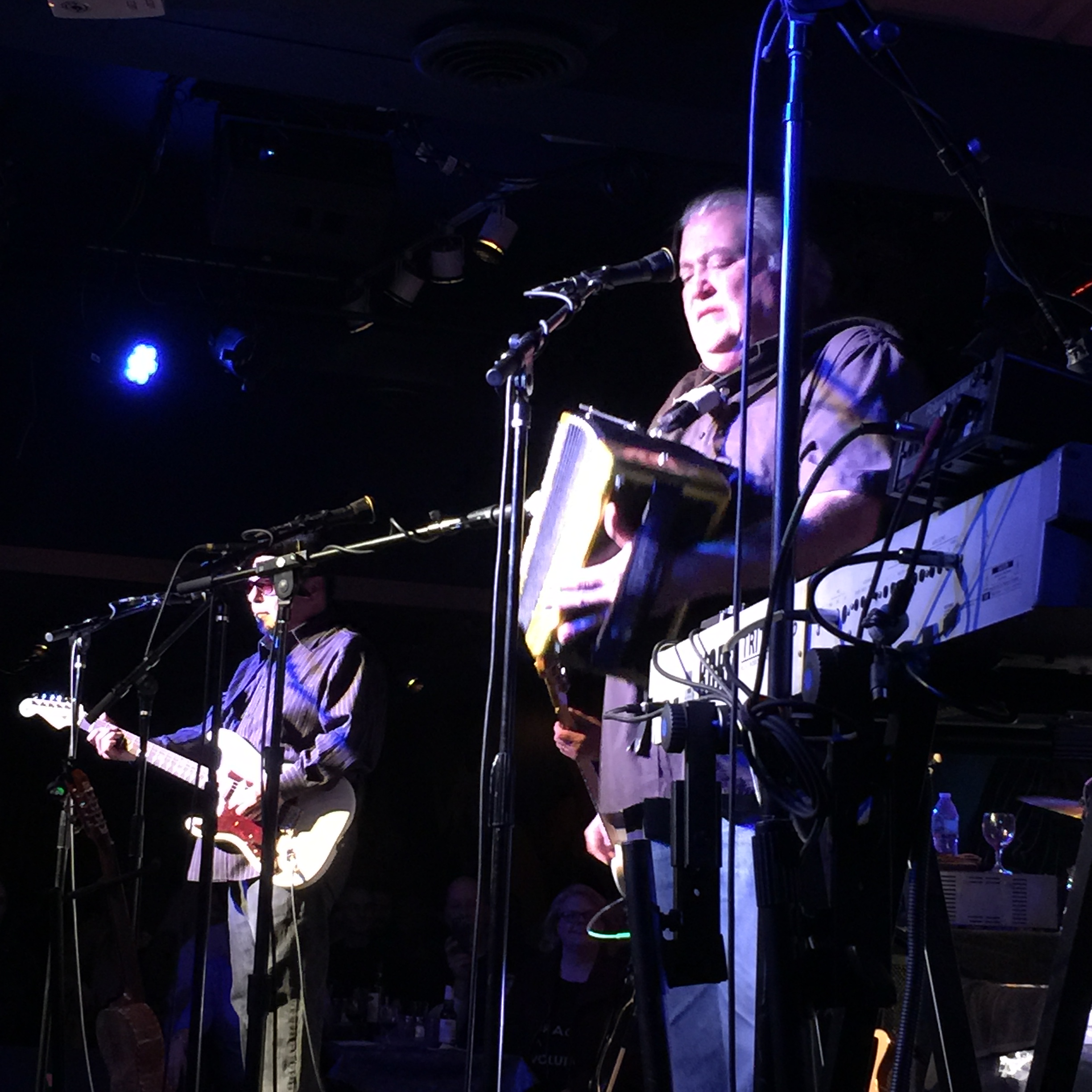
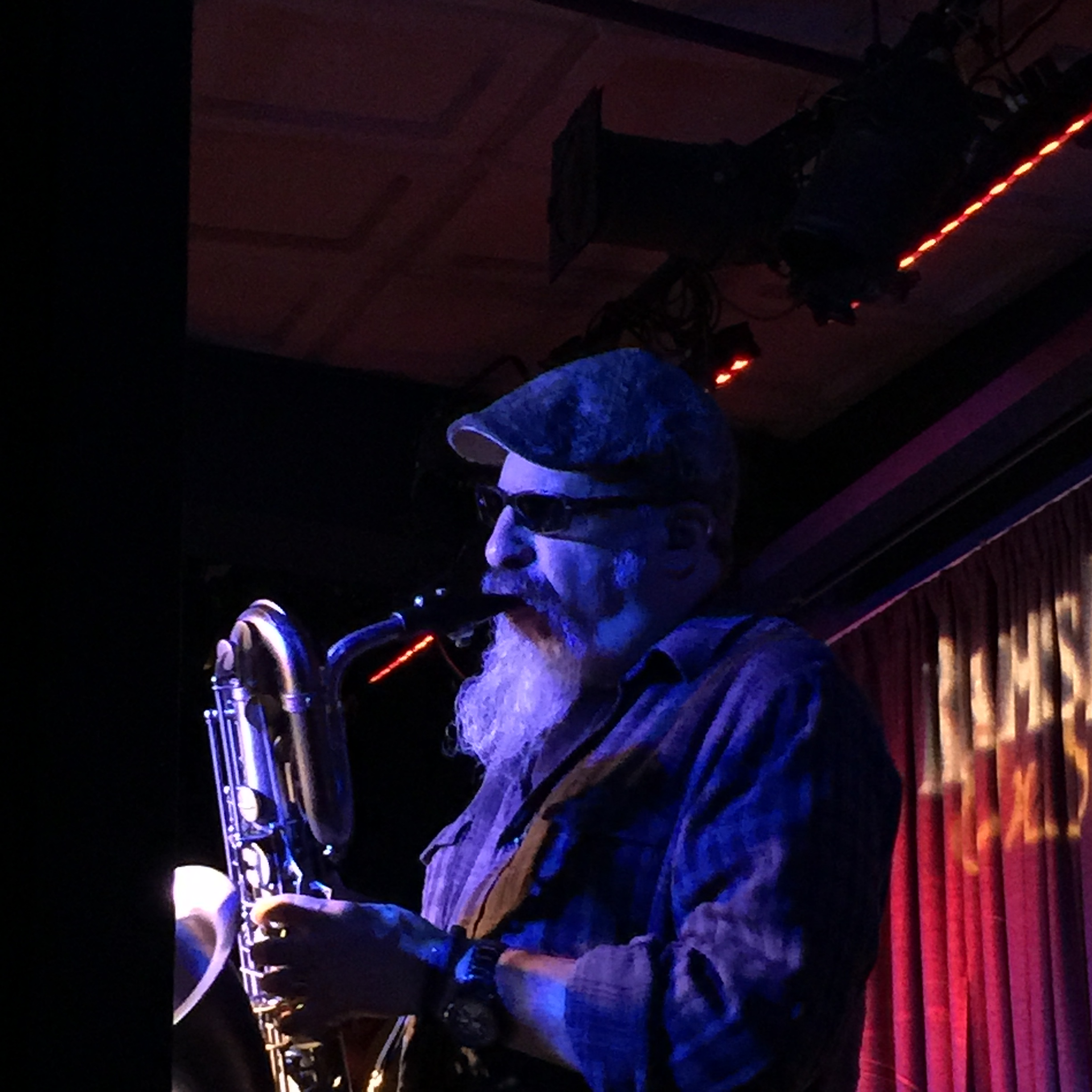
Formed in 1973 but not coming into national recognition until 1983’s “…And A Time To Dance”, Los Lobos has kept the same set of four musicians for that entire time: David Hidalgo on guitar and accordion, the sunglasses-clad Cesar Rosas on guitar, Louie Perez on guitar, Conrad Lozano on bass, all of whom met in high school in East Los Angeles. Saxophone, flute and keyboards virtuoso Steve Berlin jumped over from the Blasters to Los Lobos 1984 to complete the core band that has now held constant for three decades.

IMG_0462IMG_0439


Over the years, Los Lobos have continued to be critics favorites and a sparkling live act and long after the bright “La Bamba” lights have faded, Los Lobos have continued to make album after album of subtle, powerful, nuanced rock influenced by their East LA background to a core group of devoted fans.

But it’s really their live shows where Los Lobos has made their career. They play without a setlist (or a net, for that matter). It appears that they tend to know what the first two or three songs of a set are going to be and then they feed off the crowd and depending on how the crowd responds they move off in that direction. Sometimes their shows are merely very good, sometimes they are brilliant with moments of musical transcendence, especially when Hidalgo is feeling inspired.

Hidalgo and Rosas trade off vocals from song to song, with Rosas doing more of the Norteno and gruffer blues vocals and Hidalgo’s heartbreaking tenor voice carrying off the more poignant ballads and mid-tempo numbers. Hidalgo is an amazing soloist on guitar and accordion and as a singer he is a real revelation, a shy mountain of a man with a gorgeous voice capable of pain and joy, sometimes simultaneously.

When you watch a Los Lobos show, you are taken with how clearly each musician is listening to the other musicians and adjusting their playing in and out of the melody around each other as if they are engaging in an intertwined musical dance.

The other thing you notice is that they’re still pushing themselves musically to find both new colors and moods from the older songs. Most bands forty years into their careers are just going through the motions, playing the hits like a jukebox for the crowd. Los Lobos shows, though, are a celebration of the power of music to continually reinvent itself as the musicians weave and out of each musically in new arrangements pushing each other to find something new out of the old songs.

They still play with a power and a passion belying their years which was testified to by the two sets they played to appreciative crowds in Annapolis, Maryland at the Ramshead on Feb 27. I saw the late set (musicial tip: always hit the late set for any band playing two sets) and once again they did not disappoint.

They played a roughly one hour forty-five minute set that covered their entire career and jumped in and out of every style and genre they play, with maybe a slight emphasis on the jazzy side of the blues. The highlight to me was a showstopping version of the Billy Myles blues standard “Have You Ever Loved A Woman” made popular by Freddie King in the early 1960s, with a solo by Hidalgo that figuratively nearly caught his guitar on fire.

Other highlights were “I Can’t Understand”, “Maricela”, a really nice ten-minute version of the Grateful Dead’s “Bertha”, and every song where Hidalgo played accordion. He has to be the best accordionist in the blues/roots scene.

Los Lobos play music not because they’re trying to be cool or trendsetters. They’re not trying to have another big hit. Los Lobos play music because they’re true musicians, and playing music is what musicians do.

Catch Los Lobos when they come to your town. They are true American originals.

Below is a clip from the show with Rosas doing lead on a cover of “Papa Was A Rolling Stone” then “I Can’t Understand” followed by Hidalgo taking the lead on “Down On The Riverbed”. 

https://www.youtube.com/watch?v=MVZizk1cJmI

Gig review: Joanne Shaw Taylor – “The Dirty Truth” – Annapolis, MD – 2015-02-11

 IMG_2250

English guitar phenom Joanne Shaw Taylor takes Annapolis by storm in support of her new album “The Dirty Truth”

It wasn’t all that long ago that the blues was a prominent part of the music scene, with the stars of the blues scene being household names in the general public. Young rock musicians, who learned to play by spinning the albums from the blues masters and trying to copy what they heard, revered blues guitarists and treated the albums as sacred artifacts.

As long as people experience love and loss, and the eternal struggle between the sacred and the profane, the blues will never die. In 2015, however, the blues scene has fragmented into any number of niches, each with a small but dedicated set of followers, and the stars of the genres seem to be known mostly only within the larger blues community. Blues 2015 seems to be defined by rigid rules and styles, at times seeming almost a formalistic exercise in style where both the artists and the audience know exactly what’s expected of them.

But a genre as hoary as the blues can still surprise. One of the surprises to me over the last decade is how vital the European blues scene has become. There are summertime folk/blues festivals throughout Europe, and the fan base seems to be as fervent there, especially with young people, as anything in the US. On a business trip a few years back to Moscow, Russia, I serendipitously caught a local blues festival and was really surprised by how much the young people were into it as if it were a new thing being freshly invented.

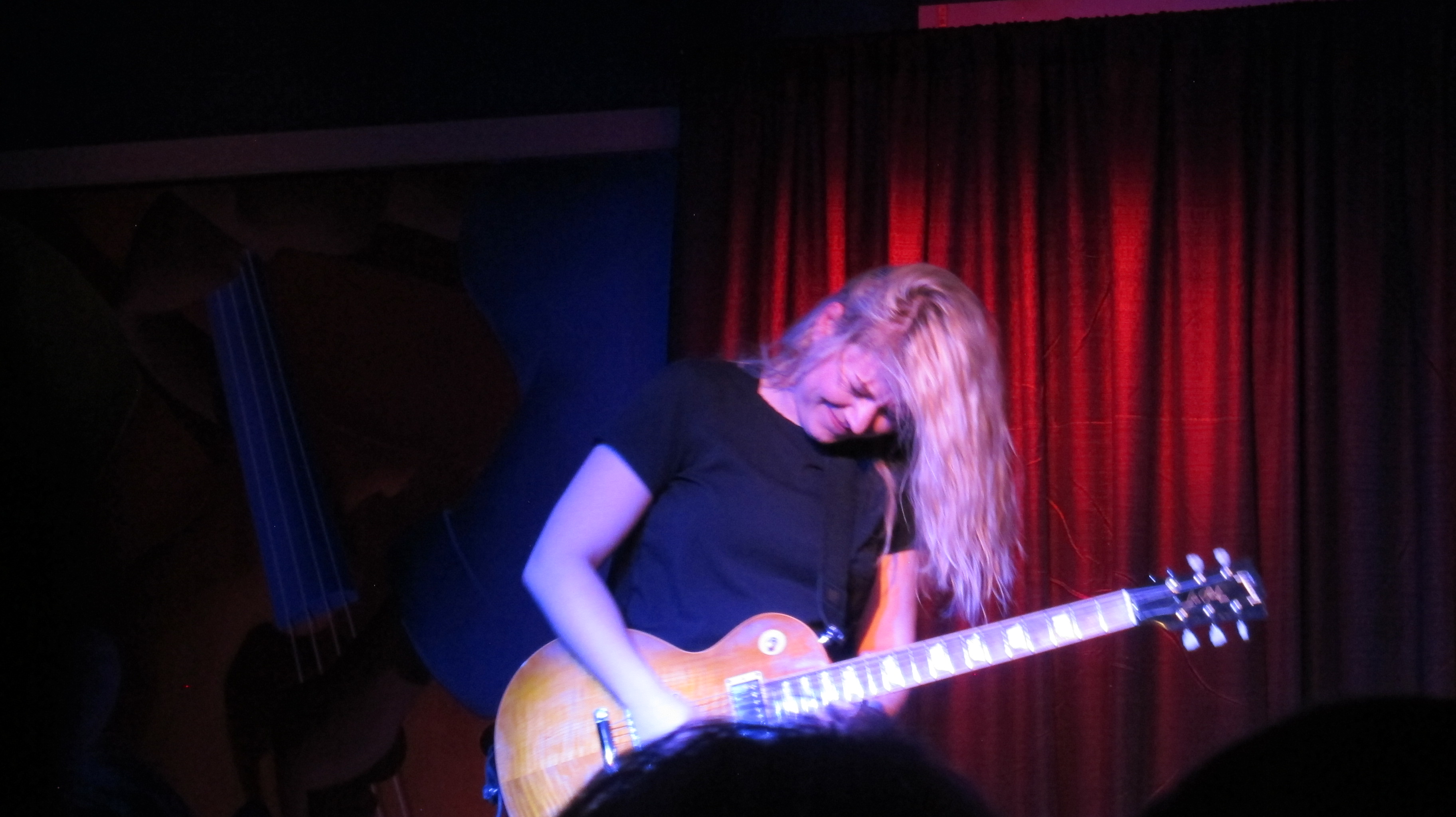
An even bigger surprise to me is how many of the young European blues guitarists are female. Two of the most well-known of this new breed are Serbian whiz Ana Popovic and England’s Joanne Shaw Taylor, the latter of whom played a terrific set on Wed 2015/02/11 at the Ramshead in Annapolis, MD in support of her excellent new album “The Dirty Truth”.

I’ve followed Ms. Taylor’s career since her 2009 debut with “White Sugar” but last week’s show was the first I saw in person. She really is as good as advertised, and I would strongly recommend seeing her if you’re interested in what 2015 blues and boogie-rock sounds like.

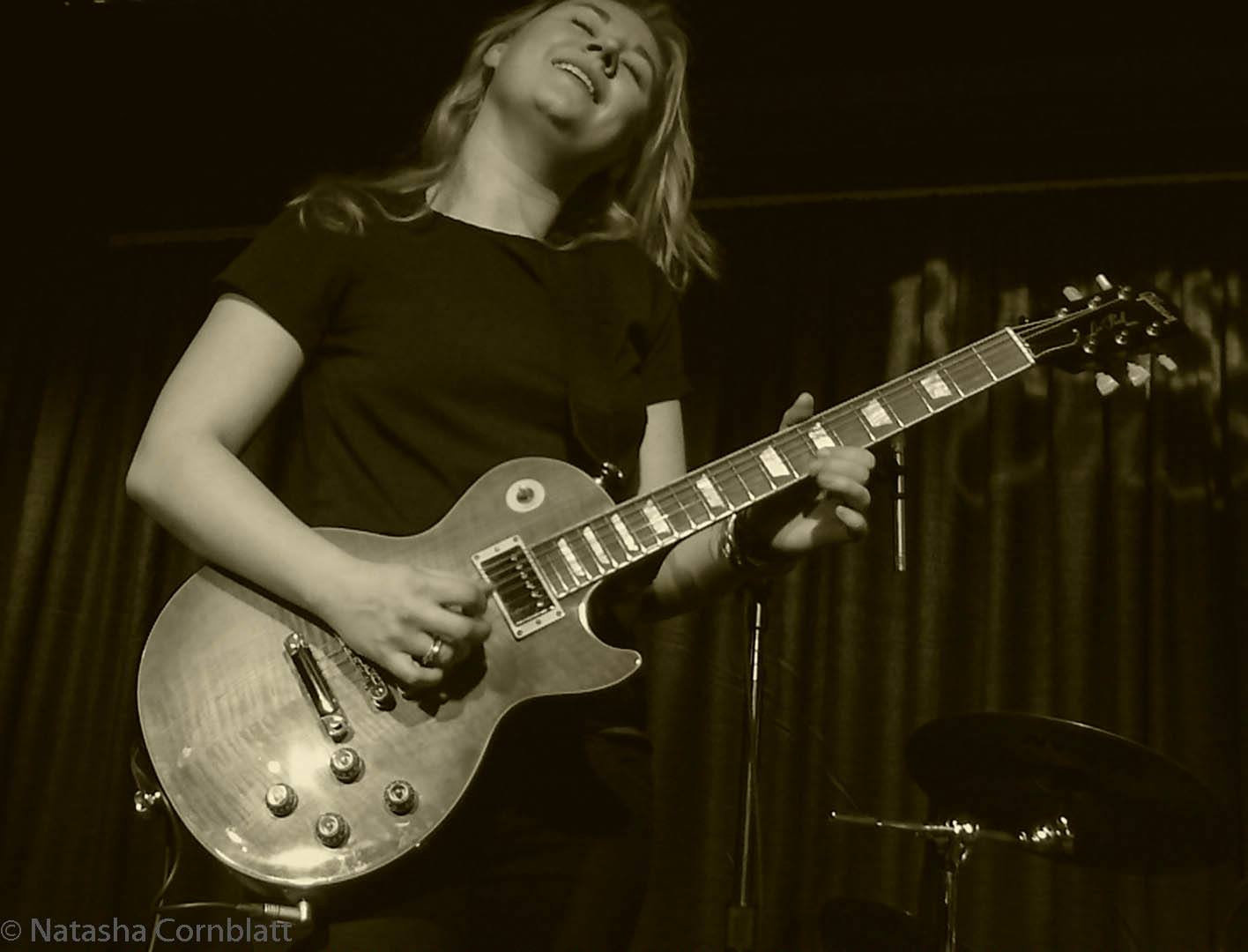
Taylor eschews the typical pitfall of young blues phenoms of always trying to play as fast and loud as she can. Instead, she employs a style that is supple, melodic, and lyrical, while retaining all of the power.   Although there were occasional times where she just threw down a monster solo on her Les Paul, far more often she let the melody and music take her at their own pace, with her soloing and riffing style in service of the music, rather than vice versa.

Backed by an able rhythm section from Detroit, she ran through selections from her entire career from “White Sugar”, “Diamonds In The Dirt” and “Always Almost Never” although she did focus on songs from the new album “The Dirty Truth”.

In addition to her sparkling guitar playing, Taylor is an engaging vocalist, with a whiskey-soaked voice belying her years and an expressive phrasing that has obviously been honed by years on the road.

Highlights to me were “Diamonds In The Dirt” as well as “Mud Honey” and “Tried, Tested and True” from “The Dirty Truth”.

If Taylor is an example of the hands into which the blues have been entrusted in 2015, then the statement that the blues will never die may just turn out to be true. If those hands happen to be young, white, female and English all the better.

If you ever get the chance to see Taylor in concert, by all means do so. She’s the real deal.

10854429_1583926191842821_2477344625611859229_o

Photo courtesy of Natasha Cornblatt

Album Review: Sleater-Kinney – “No Cities To Love” – The Welcome Return of the Riot Grrrls

 SleaterKinney_NoCities_2400-e1413599062867-298x300

Sleater-Kinney return after a decade’s hiatus with the best album of their career. 

When a band reforms after a long layoff, there’s always a bit of trepidation. For every example of a successful reunion that results in an album that’s a welcome addition to a band’s canon, such as Big Country’s “The Journey” or Toad The Wet Sprocket’s “New Constellation”, both from 2013, there are many more examples where the band was obviously unable to catch the previous magic and frankly embarrasses themselves.

Rarest of all is the case where a reunited band creates the best work of their career, which is exactly what Sleater-Kinney have done with their outstanding new album “No Cities To Love” on Sub Pop. “No Cities” is the most assured, confident and accessible album of their career, and may stand as a career-defining work for this three-piece from the Pacific Northwest.

Background: Sleater-Kinney was the most proficient and well-known band to come out of the 1990s seminal “Riot Grrrl” movement. “Riot Grrrl” was a broad label applied to a group of post-grunge female alternative bands, primarily based out of the Seattle scene such as Sleater-Kinney, Bikini Kill and Bratmobile. Riot Grrrl was as much a political movement as a musical one, featuring a feminist political stance and a DIY aesthetic.

Sleater-Kinney (named after an Interstate exit near Lacey, Washington where the band practiced) consists of Corin Tucker (vocals and guitars), Carrie Brownstein (guitars and vocals) and Janet Weiss (drums). Sleater-Kinney released seven well-regarded albums between 1995 and 2005 starting with an eponymous debut in 1995 and ending with “The Woods” in 2005. After breaking up, Tucker continued to play with various bands, and Brownstein/Weiss went on to form a band called Wild Flag that released a well-reviewed album in 2010. Of course, the most visible project from any of the members has been Brownstein’s turn as half of the creative team behind the satirical “Portlandia” TV series with her partner Fred Armisen.

Always a critical favorite, their influence was disproportionate to their commercial success, with their highest charting album being “The Woods” at number 80 on the US charts. However, their influence was felt throughout the indie/alternative scene throughout their career, influencing bands from L7 and Hole to No Doubt. Sleater-Kinney featured the interplay between Tucker’s dramatic vocals, variously shouted, yelped and sung at top of her range reminiscent of PJ Harvey, over Brownstein’s angular, skittering and alternately heavy and sludgy guitar (and occasional vocals) and anchored by Weiss’s solid and metronomic drums.

I admit I was slow in climbing on the bandwagon. From the start, I recognized what they were attempting to achieve, agreed that they were hitting their mark, and that what they were doing had value. Truthfully, though, although I liked individual songs from them I never really clicked on an entire album from them until their fifth album “All Hands On The Bad One” from 2000. I suppose that I liked the idea of early Sleater-Kinney better than the actual thing until I finally caught up to what they were (and now are again) doing.

I saw them live once, and they were just a crashing wall of sound. I only really remember two things: Janet Weiss bashing the drums like a maniac, beating them as though they’d crashed her car, and the way that Brownstein/Tucker traded off lead guitar licks, and without a bass player in the band one of them (usually Tucker) would occasionally play bass lines on the guitar. I liked that – it’s always good to remind bass players that they are optional. Here’s a linked overview that gives you some of the history if you’re unfamiliar with them:

Which brings us to “No Cities To Love”. This album is a 33-minute, 10-song revelation, if not revolution, full of ferocious and inventive riffs, licks and melodies. The guitar tones draw as much from Gang Of Four, Wire, and Television as they do anything from 90s or 00s alternative.   The guitars can veer from Sabbath-esque sludge to post-millenial Futureheads/Editors within a single song, reaching all the way to pre-synth Devo or early B-52s on occasion. Tucker’s (and occasionally Brownstein’s) quasi-operatic vocal prowess is undiminished, Weiss’s drumming is outstanding, with lots of quirky polyrhythmic touches to complement her jackhammer style.

The lyrics show a mature self-awareness and multiple shadings whether discussing domestic life and the struggles to make ends meet – and also maybe also the price of fame – (“Price Tag”) or “Fangless”’s kissoff to an unnamed person that also hints at regrets for their past (“Where’s the evidence, the scars, the dents That I was ever here?”). Perhaps the most curious lyric is on the title track. Given the identity that the band has with the Pacific Northwest, it’s strange to hear them sing “There are no cities, no cities to love; it’s not the city, it’s the weather we love!” The implication is that all cities are the same, it’s only the geography that matters, but given how specifically they have been tied to Seattle in the past and of course now Portland due to Portlandia, I don’t quite get the lyric.

But I digress.

The album leads off with “Price Tag” which sets the tone for the full album, full of spiky, quirky and occasionally atonal guitar lines, straining vocals and a bludgeoning drumline. “Fangless” is built around a classic S-K swirling guitar figure. “Surface Envy” (featured live on their recent Conan O’Brien performance) has demented guitar accents that squonk and squeal and a descending guitar line over a classic alternative sing-along chorus.

“No Cities To Love” is perhaps the most memorable song on the album. Over a propulsive beat and bass-line played on guitar and another bouncy, spiky guitar riff, the song has a great bridge and chorus that is instantly memorable and will have you humming it all week. “A New Wave” and “No Anthems” complete a strong three-song mini manifesto at the center of the album. Brownstein sings the galloping beat of “A New Wave” with punky enthusiasm “It’s not a new wave it’s just you and me….invent our own kind of obscurity” and it’s clear that although she’s become best known as a comic actor on Portlandia she can still bring the noise.

“No Anthems” is a bit of misnomer; the bridge/chorus are as anthemic in their own way as anything they’ve ever done. “Bury Our Friends” is another winner. Spitting furious lyrics over insistent guitar lines, it’s a call to action, a manifesto that rings as true as anything they’ve ever done while lamenting the passage of “our own gilded age”.

The album runs out of breath a little bit in the last two songs, but with the first eight songs being as enjoyable as they are, “No Cities To Love” is already a candidate for rock album of the year. Welcome back, ladies, we missed you.  Download: “Price Tag”, “No Cities To Love” Score: 9 Suns out of 10.

 sun-graphic_yellowsun-graphic_yellowsun-graphic_yellowsun-graphic_yellowsun-graphic_yellowsun-graphic_yellowsun-graphic_yellowsun-graphic_yellowsun-graphic_yellowdc7ejqKc9

Here they are doing “A New Wave” on Letterman: https://www.youtube.com/watch?v=QLwD1to3dZU

Saluting the greatness of Wanda Jackson, the primeval Riot Grrrl

1

It’s amazing how much musical history from the 20th century has been lost to time. Nearly as amazing is how much has been restored via the ‘Net and YouTube in particular.

If you know me, you know how much of a soft spot I have for women who play guitar. They are my weakness. I partially blame Wanda Jackson. Wanda Jackson is one of the most underrated rock-n-roll musicians of all time.

Dismissively called the female Elvis, Wanda Jackson was the original Riot Grrrl. When Wanda Jackson rolled through your town, the town’s temperature changed. When Wanda Jackson came to town, the oil wells blew, mens’ hats flew off their heads, and mothers covered the eyes of their sons. Wanda Jackson set fire to your town and left only smoldering embers before she left to destroy the next town with her brand of rockabilly/country. Ms. Jackson knows more about life than you have learned in your time on this mortal coil.

I met her when I was a kid. She smelled nice.

AC/DC’s Angus Young’s guitar is so awesome that it even redeems Bee Gees songs

1

AC/DC is an atypical band for me to like – they play big, dumb, goofy, lascivious rock and roll and in their case I mean that as a compliment – they’re brilliant at what they do. In particular, while they play hard rock, their sound is characterized by joy. Angus and Malcolm Young’s guitars always sound like the guitars are happy to be being played.

I’m convinced that Angus Young‘s Gibson SG guitar is a living breathing sentient being, and that actually she (come on, it has to be a she, let’s assume her name is Gibby) plays Angus and not the other way around.

Gibby has such magical powers that she even makes the Bee Gees listenable. My real fear is that Gibby could cure cancer or feed the world but instead she’s just been slacking off being awesome at rawk.

Andrew McMahon In The Wilderness – “Cecilia And The Satellite”

1

I think one of the greatest things in pop music is when an artist you’ve never heard before makes a song with a chorus so great that it’s immediately your new favorite song. You think you must have known it all your life and you listen to it over and over on repeat until the song burrows its way into your brain like an ear worm.

Andrew McMahon, formerly of Something Corporate and Jack’s Mannequin, did that to me with his new single “Cecilia And The Satellite” written for his infant daughter (that’s them in the video). It’s a very 2014-sounding song with the heavy drums, the soaring refrain and the requisite “whoa-oa” choruses that make you want to start the Zippo Lighter app on your iPhone and hoist it in the air.  The rest of the album is definitely worth a stream as well; it’s full of songs that in a more fair world would be singles on the pop chart.

I had lost track of Andrew McMahon after Something Corporate; good to see him making a comeback.